
Many people have what’s called a “forward head posture” where the head comes forward from the trunk and the ear is anterior to the shoulders. It has become so common now that having an upright, neutral neck is actually more rare to see. Although symptoms might not present itself right away, being in non-neutral joint positions often lead to a host of other problems over time so it would be beneficial to do something about it.
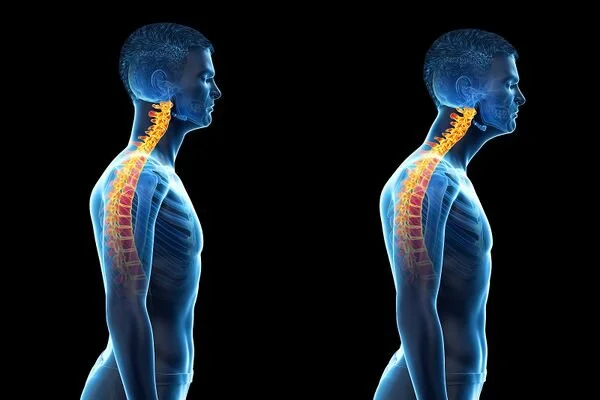
The forward head posture on the right shows the ear is anterior to the shoulder
Some of the secondary problems that “forward head posture” could lead to are (1):
Neck, shoulder, and back pain (2)
Strain and tightness in neck muscles; trigger points (3)
Compression in the cervical spine (4)
Nerve compression; radiculopathy, numbness/tingling in upper extremities
Herniated discs
Osteoarthritis, disc degeneration
Headaches; radiating pain in the head
Pain in the temporomandibular joint (TMJ)
Muscle weakness, muscle imbalance
Does not look good aesthetically
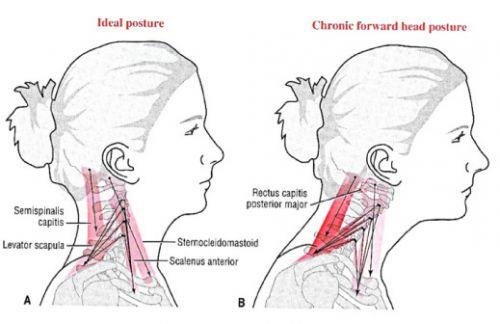
Common neck muscles that get tight with a forward head posture
So why has this become so common? Most people are in flexed, seated positions throughout the day working/studying in front of a desktop or laptop, excessively using phones or electronic devices, looking down to read, and lying down or sleeping with too many pillows. All of these positions facilitate a forward position of the head and over time becomes a natural part of one’s posture. Stiffness and increased flexion in the thoracic spine also brings the shoulders and scapulae forward which naturally brings the head forward.
THE ANATOMY
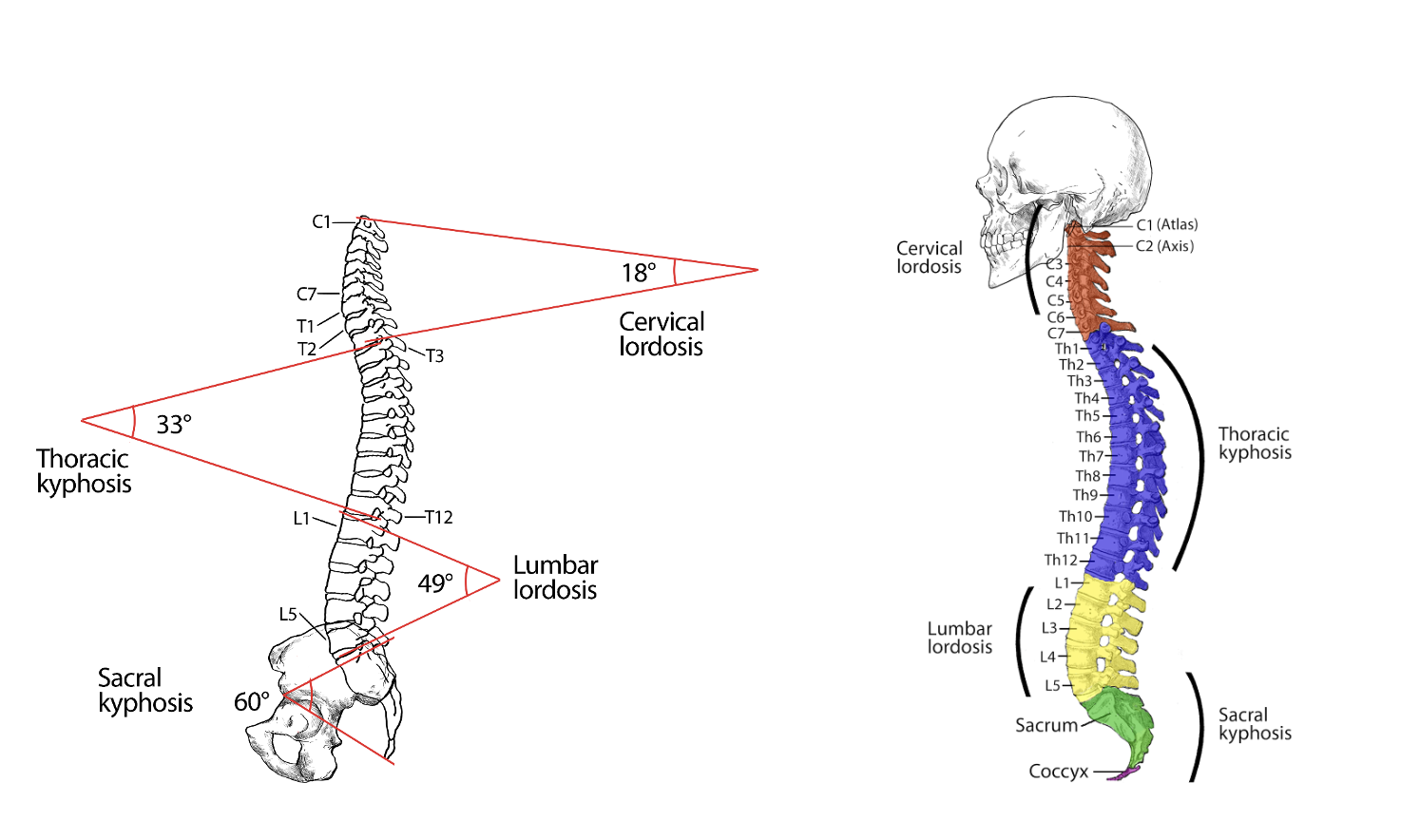
The cervical spine is in a lordosis similar to the lumbar spine
The neck’s “neutral” position is when the cervical spine is in a slight lordosis (similar to the lumbar spine), so in a standing position if a plumb line was dropped from the ceiling, the ear would be in alignment with the shoulder. There are muscles in the anterior region of the neck called the deep cervical flexors and this, along with the upper thoracic extensors, help keep the neck neutral. The deep neck flexors consist of the longus colli and longus capitus muscles, as well as the rectus capitis anterior and lateralis (4). The longus colli muscles are the prime movers for cervical retraction which is the movement that helps keep the neck upright (4).
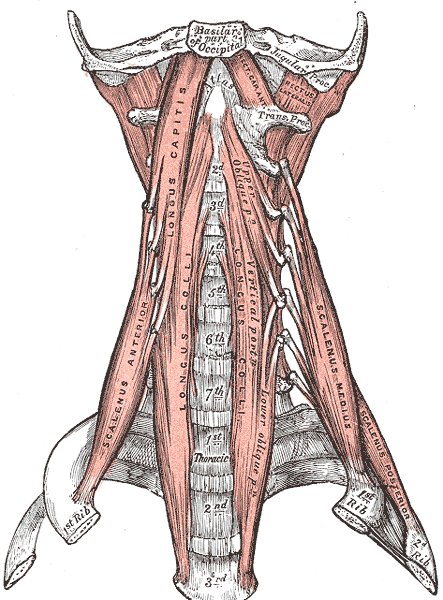
Deep neck flexor muscles in the anterior part of the neck — the longus colli are the prime movers for cervical retraction
With forward head posture the cervical vertebrae are displaced anteriorly and this decreases the spaces between each joint on the posterior side (this is shown on the picture below on the right). Since there are nerves that come out from the posterolateral area between each vertebrae, there is an increased likelihood of the nerves being affected as well as degeneration in the lower cervical spine over time. With an upright neck, as shown in the picture below on the left, there are equal spaces between each vertebrae (4). Common muscles that get tight with a forward head posture are the levator scapulae, semispinalis capitis, anterior scalenes, suboccipitals, and sternocleidomastoid muscles (3).
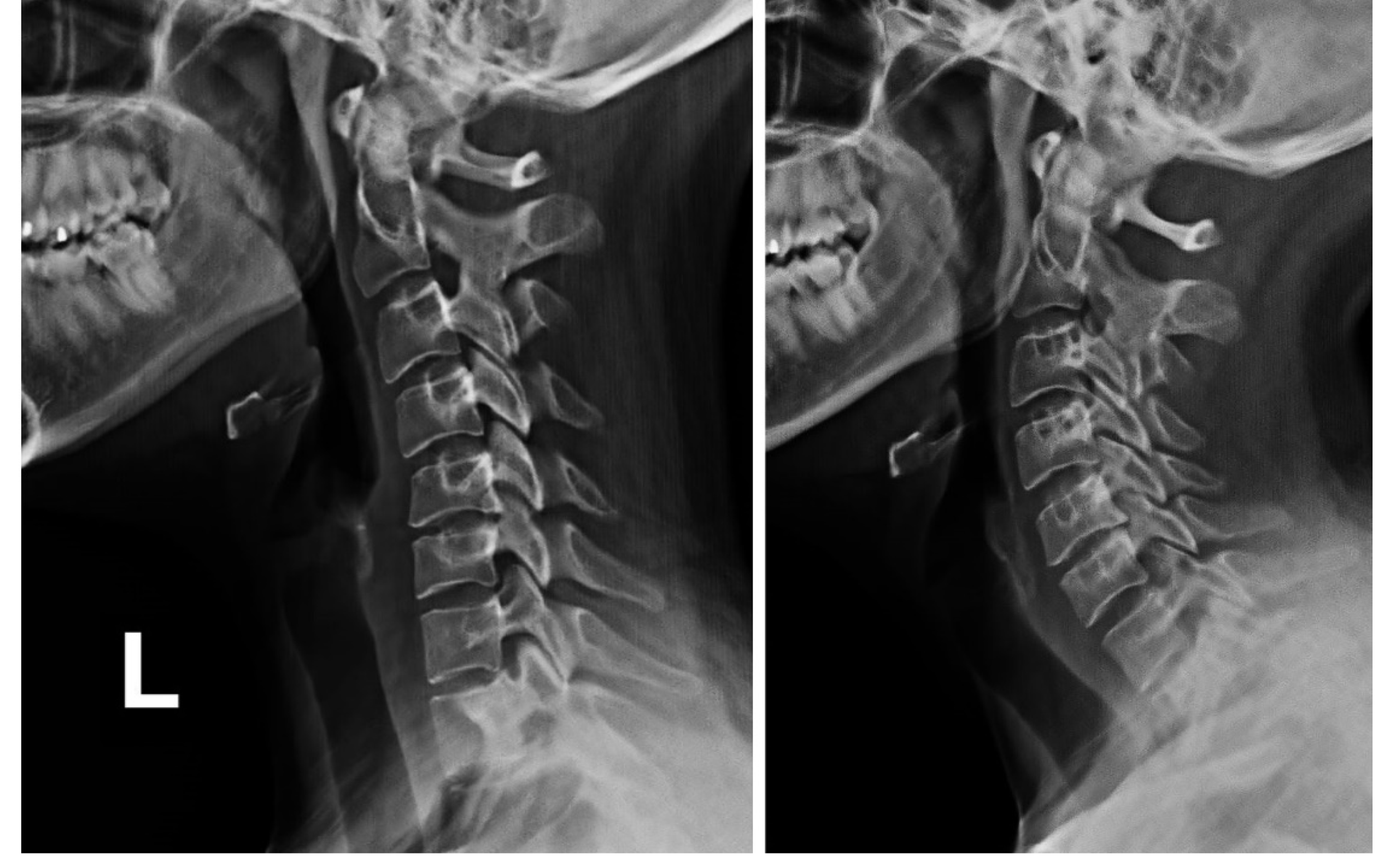
LEFT: shows an upright neck with equal spaces between vertebrae. RIGHT: forward head causes decrease in the spaces on the posterior side of the vertebrae
STRATEGIES FOR IMPROVEMENT
Improving a forward head posture requires a focus on the muscles mentioned above. However, simply uprighting the neck is not enough for many people as certain postures and movement patterns have been engrained in the body for a long period of time so we subconsciously revert back to these patterns. A better awareness of neutral positions are needed for the neck, but also for the upper back, lower trunk, and scapulae and practicing positions that facilitate that.
Areas of emphasis:
Proper mobility is needed in the thoracic spine – without uprighting this area properly it’s very difficult to achieve a neutral neck.
Proper trunk stabilization between the lower ribs and pelvis: This provides the stable base and foundation for the upper regions and helps balance the muscles in the area.
Keeping the shoulder blades in a neutral position — this is important to maintain balance of the muscles in the neck, back, and shoulder girdle.
EXERCISES:
-Cervical retraction: Tucking the chin with the face perpendicular to the floor is a good way to practice retraction. This could be done by placing two fingers on the chin and pushing straight backwards as far as you can (like forming a double chin). Hold for 3 sec, release, and repeat (1 set of 10).
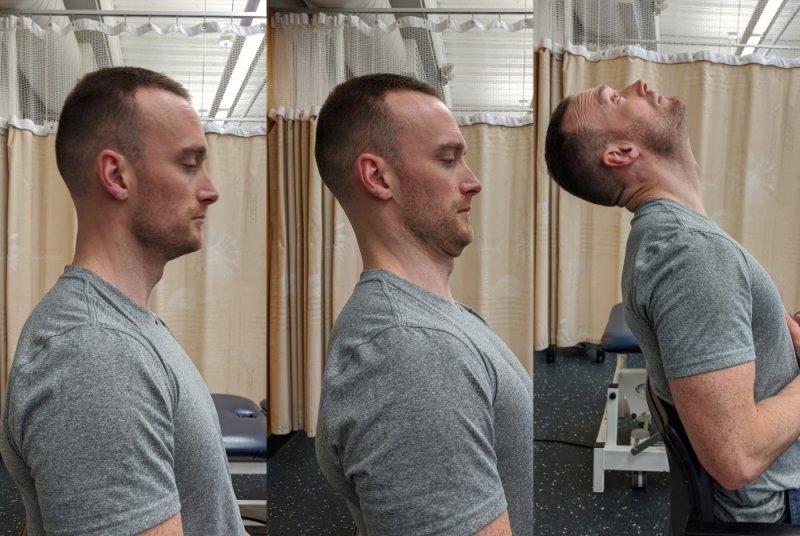
Cervical retraction, then cervical extension
-Cervical extension: Once you tuck your chin in, look up as high as you can into extension (like a ‘pez dispenser’). Come back to starting position and repeat (1 set of 10). Symptoms should not get worse with each repetition.
**If it feels okay after 10 repetitions, try look up and shaking your head ‘no’ a couple times (small shakes). So first tuck, then look up, then shake. (1 set of 10).
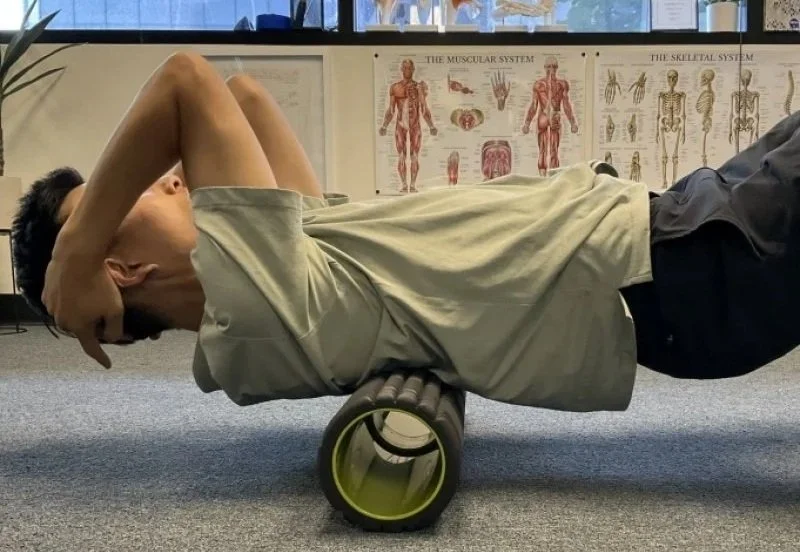
Thoracic mobility using foam roller
-Thoracic mobility using foam roller: Lie down on back and put foam roller horizontally across mid back. Support head with hands behind head and brings elbow in. Lift hips off floor and roll back and forth along thoracic spine (from below the neck down to where the ribs end). Do not roll into low back or neck.
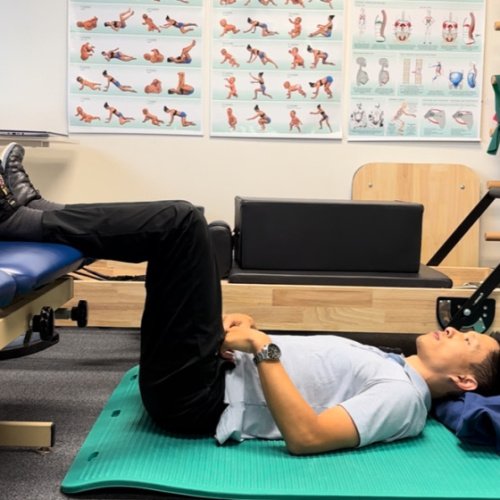
DNS Supine 3-month position
-DNS Supine 3-month position: Lying on back with feet up on chair, head supported. Place your fingers in 2 inches in from pelvic bone. Breathe in thru nose and initiate breath into area where fingers are. This area should rise before the chest rises. As you exhale, press outwards into your fingers as to maintain the pressure. Continue breathing while maintaining stabilization. Make sure upper abdominal area is relaxed. You should feel back of the head and both shoulder blades into the surface, as well as upper gluts.
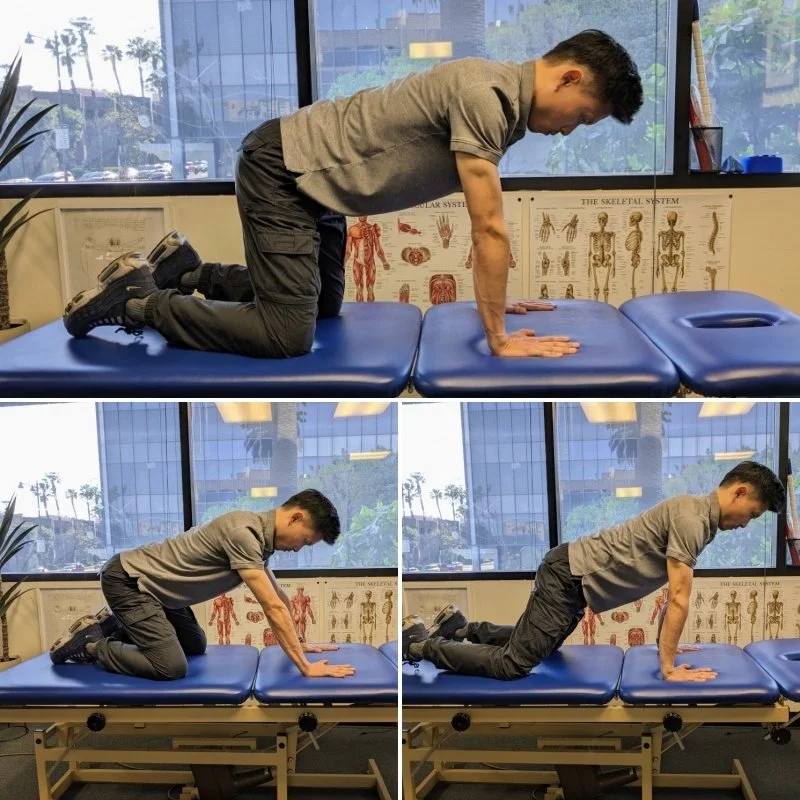
Quadruped neutral and rocking
-DNS Quadruped neutral and rocking: Get into an all fours position with hands below shoulders and knees below hips. Keep spine straight — the neck should be aligned with rest of spine. The shoulder blades should be down away from ears and out away from spine – so it is flat across the upper back (no dip). Maintain stabilization in the lower trunk. Equal weight bearing throughout palms and rotate your upper arms/shoulders outwards, relax pecs. Rock back and forth maintaining above positions. (**A mirror could help you see your positioning better).
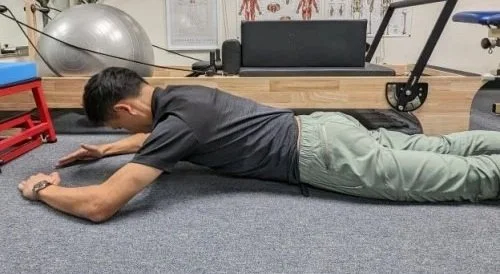
DNS Prone 3-month position
-DNS Prone 3-month position: Lie on stomach flat on the surface with forehead rested on a towel and bent elbows at about ear level. Breathe and stabilize into lower trunk (feel pubic symphysis bone and both inner elbows on surface). Keep shoulder blades "down and out" away from ears and away from spine. Externally rotate shoulders and you should feel inner elbows pushing into the surface. The chest and head are lifted off the surface. Keep spine straight especially the neck. The shoulder muscles should be activating to maintain neutral position. Make sure to keep gluts and hamstrings relaxed.
Sources:
Neumann, Donald A. Kinesiology of the Musculoskeletal System: Foundations for Rehabilitation, 2nd Edition. Mosby.
Kendall FP, McCreary EK, Provance PG, Rodgers MM, Romani WA. Muscles testing and function with posture and pain. 5th ed. Baltimore: Lippincott Williams & Wilkins.
Questions or comments? Contact us below.
