
Why long travel could contribute to pain
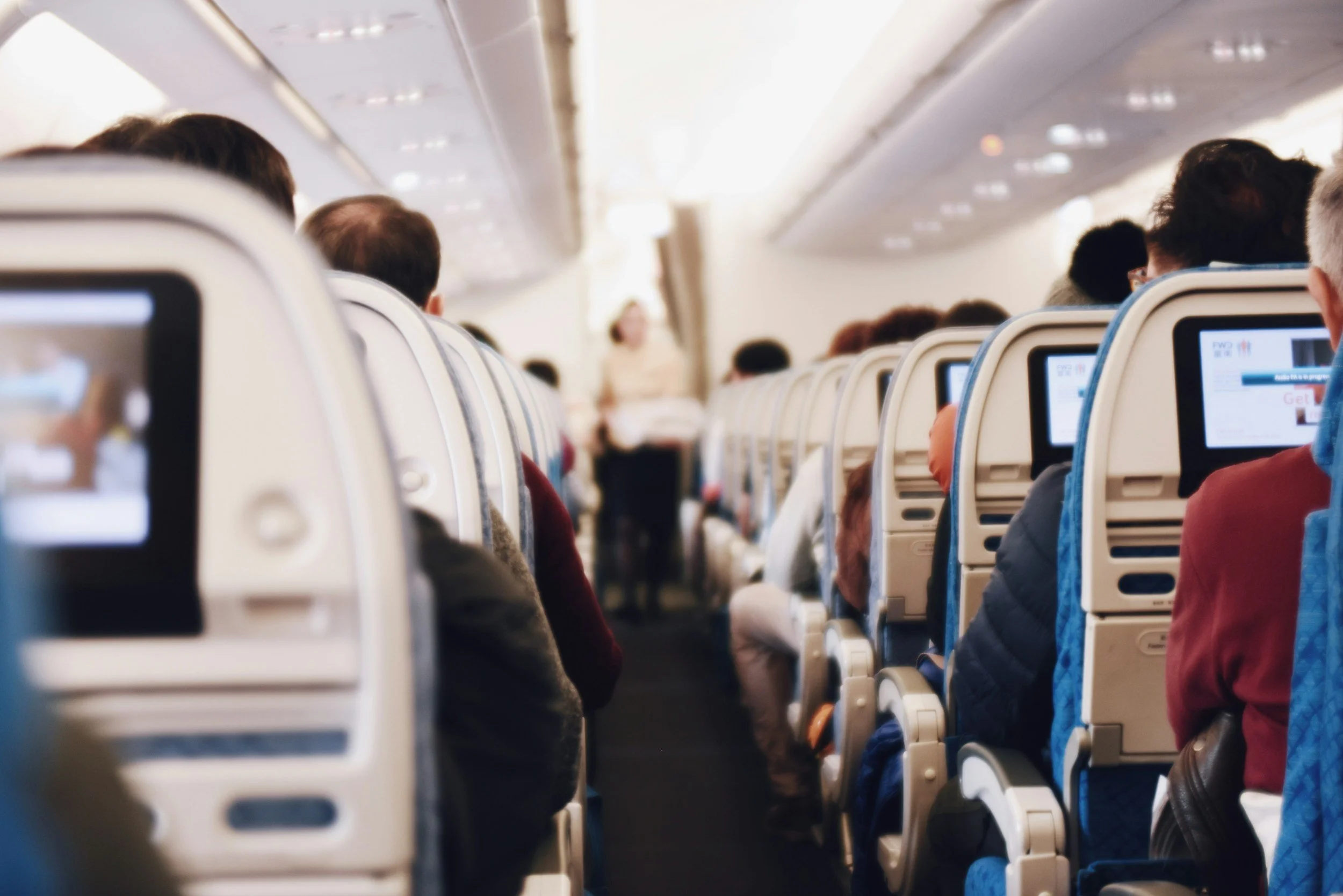
The benefits of travelling are well known – time off work, getting out of usual routines, visiting different places and cultures, spending time with friends and family. But there are people who often come into physical therapy clinics after a long travel experience complaining of pain or flare-ups in the back or neck and the following could explain some reasons why.
LONG PERIODS OF SITTING
Traveling often requires long periods of time sitting in the plane and car. A road trip or cross country flight could often be >5 hours and some international flights require >10 hours on the plane. If neutral, joint-centrated positions were able to be maintained during this time it would not be a problem. However, this is often not the case which in turn produces fatigue and imbalances in the muscles, tightness, increased strain on passive structures, and pain. That’s why even with sitting in front of the computer for work, it’s recommended to stand up and move the joints/muscles every 1-2 hours. The same would be true with traveling — in the plane this would mean going to the bathroom or standing in the aisle or an open area to move the body (the aisle seat would be better for this). With driving, this would mean taking short breaks at rest areas or parking lots to stand and move.
BASIC PRINCIPLES WHEN SITTING
The chairs in planes or cars are not made like our office chairs which are generally made with ergonomics in mind, but no matter the variation in chair, the same principles apply. The angle of the hips should be at or a little more than 90 degrees, sitting with the buttocks all the way to the back of the chair and keeping the back against the back support. Sometimes with car chairs the seat is angled upwards a bit so it would be best to angle the back of the chair backwards a little more to respect the hip angle. The back of the head (occiput) should be touching the headrest, but for those who have a pronounced forward head posture this may not be possible. The shoulder blades should be down away from the ears and in contact with the back of the chair without squeezing the shoulder blades together in the back.
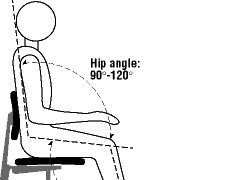
Angle of the hips >90 deg, buttocks all the way to the back of the chair, back against back support
For car chairs, the steering wheel should be at a distance where the elbows are bent and not feel like a strain to hold the arms up. This will often mean the chair will have to be brought forward a bit so that holding the steering wheel comfortably is not bringing the arms and shoulder blades too far forward (the inner borders of shoulder blades should stay in contact with the back of the chair). The distance of the foot pedals should have a mild flexion at the knees where you could easily move the foot/ankle at the pedals.
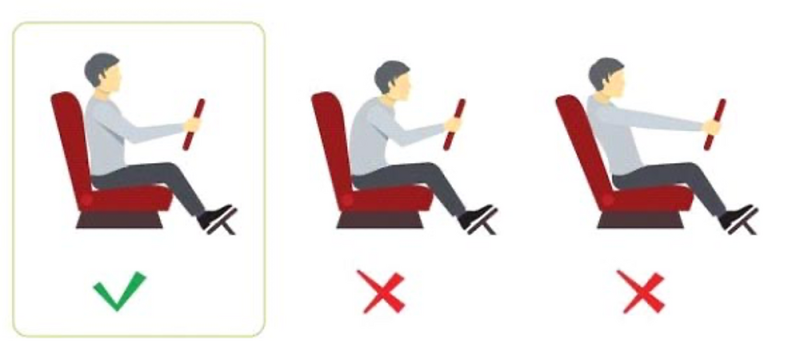
Driving position: Align proper hip angle, sitting close enough where shoulder blades stay in contact with the chair while holding the steering wheel comfortably (arms bent).
SITTING REQUIRES PROPER TRUNK STABILIZATION
Focusing on the correct sitting position is good but also needs to be maintained with proper trunk stabilization. This requires breathing using the diaphragm and increasing the intra-abdominal pressure (IAP). The DNS supine 3-month position is a good way to practice this. Lying on the back in a 90/90 position with the legs rested on a chair and knees about hip-width, initiate breath into the lower abdominal region (two inches in from pelvic bones and a little below on both sides). Maintain the intra-abdominal pressure (IAP) into this same area as you exhale so it doesn’t fully go back down with the breath. Now maintain this pressure as you breathe in and out. Also try to maintain the IAP in the posterolateral region of the abdominals under the ribs (make sure not to contract the abdominals!).
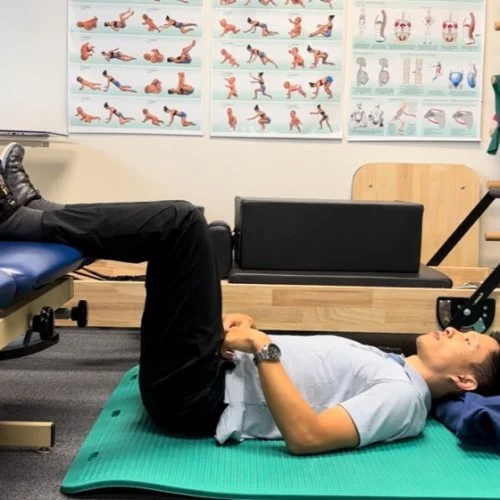
DNS Supine 3-month position
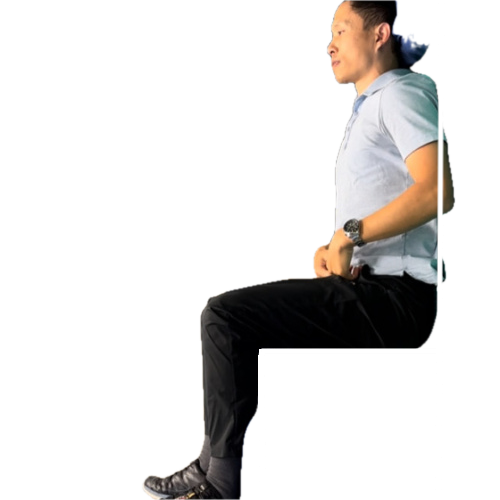
If the same supine 3-month position is rotated 90 degrees into a vertical position it would be the same position as sitting in a chair
Once this is established try to feel more emphasis on four support points: the back of the head or occiput (nuchal line), both shoulder blades (inner borders), and the upper gluteal area (between the low back and tailbone, or lumbosacral junction). As the brain learns and becomes familiar with stabilization in this horizontal position, it then becomes easier to apply this in an upright position like sitting (as shown in the picture). Now the same four support points would apply to the chair. This will help to bring the spine and pelvis into the proper positions for optimal stabilization. As mentioned above, not all people will be able to feel the back of the head or have support that high, and if that’s the case, focus on the other three points.
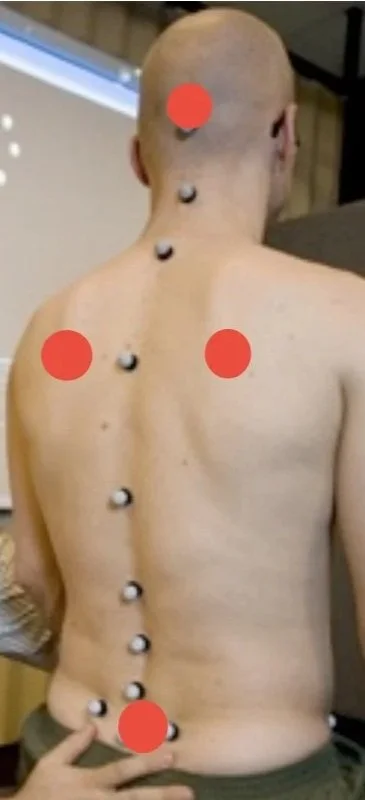
Emphasis on four support points in the back of the chair: back of head, both shoulder blades, and upper gluteals.
PHYSICAL ACTIVITY RECOMMENDATIONS
The general guidelines for physical activity for adults is 150 minutes of moderate intensity activity per week (30 minutes x 5 days) or 75 minutes of vigorous activity, and 2 days of strengthening. Fortunately, with all the walking people do during traveling (visiting tourist sites; exploring a new city), 150 minutes of moderate intensity physical activity during the week is usually not a problem to achieve. However if this is not possible, it may be good to get a brisk walk (or jog) in during some off time (ie. walk around the neighborhood). For the strengthening component (at least 2 days/wk), it’s easy to get creative with this with elastic bands, which easily fits into luggage, or body weight exercises (ie. pushups, dips, squats, lunges). Asking a physical therapist for best exercises could be helpful here.
Overall, the same principles that apply to sitting and physical activity at home is applied to travelling as well. Proper sitting positions, stabilizing the trunk, taking regular breaks during periods of long sitting, and being consistent with physical activity — all will help to avoid pain that often accompanies long travel experiences. For those who aren’t physically active in general, travelling could be a new beginning or “restart” for the body, mentally and physically, so it may be a good opportunity to start exercising and try to build habits that could translate back home.
Links:
-https://centralptla.com/blog/optimal-stabilization
-https://centralptla.com/blog/dns
-https://www.cdc.gov/physical-activity-basics/guidelines/adults.html
Questions? Comments? Feel free to comment below.
